Bloomington, Minnesota, August 24, 2026 – As Advanced Driver Assistance Systems (ADAS) become more common in today's vehicles, MN ADAS Solutions, Bloomington is drawing attention to the importance of proper camera and radar calibration after repairs such as windshield replacement, collision work, and suspension adjustments.
Vehicle manufacturers often require calibration following these procedures because sensor positioning can change. According to the Insurance Institute for Highway Safety (IIHS), forward collision warning systems can reduce rear-end crashes by up to 27% when operating with accurate sensor alignment.
Modern Vehicle Safety Features Depend on Shared Sensors
Many ADAS technologies operate through a network of cameras and radar sensors positioned throughout the vehicle. Rather than functioning independently, multiple safety features often rely on the same hardware.
A forward-facing camera may support lane departure warning, traffic sign recognition, pedestrian detection, and forward collision warning functions. Similarly, radar units mounted in the front, sides, or rear of a vehicle may contribute to adaptive cruise control, automatic emergency braking, blind spot monitoring, and rear cross-traffic alerts.
Because these systems share sensors, calibration issues can affect multiple safety functions at the same time.
A Single Misaligned Sensor Can Affect Multiple Systems
When a camera or radar unit shifts from its factory position, several connected systems may experience performance issues. In some cases, drivers may receive false alerts. In others, systems may respond later than expected or fail to detect road conditions accurately.
Examples include:
-
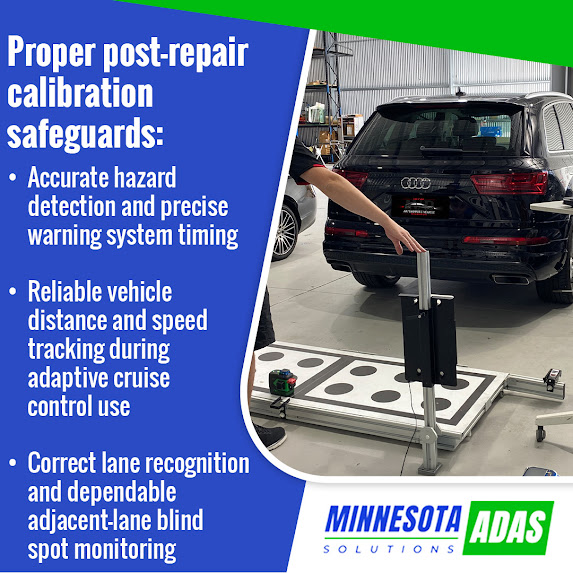
Adaptive cruise control affecting vehicle distance and speed detection
-
Lane departure warning affecting lane recognition and alert accuracy
-
Forward collision warning affecting hazard detection and warning timing
-
Blind spot monitoring affecting vehicle detection in adjacent lanes
Many of these issues may occur without triggering a dashboard warning light, making calibration verification an important part of the repair process.
Vehicle Repairs Often Create the Need for Camera and Radar Calibration
ADAS sensors are mounted in locations commonly affected during repairs, including windshields, bumpers, mirrors, suspension components, and vehicle body panels.
Even small changes in sensor position can impact how the systems interpret surrounding traffic, road markings, and potential hazards.
As a result, manufacturers frequently require camera and radar calibration after repairs involving sensor-related components. Vehicle repair facilities are increasingly working with specialized calibration providers to complete these procedures before returning vehicles to customers.
Specialized Conditions Are Required for Accurate Calibration
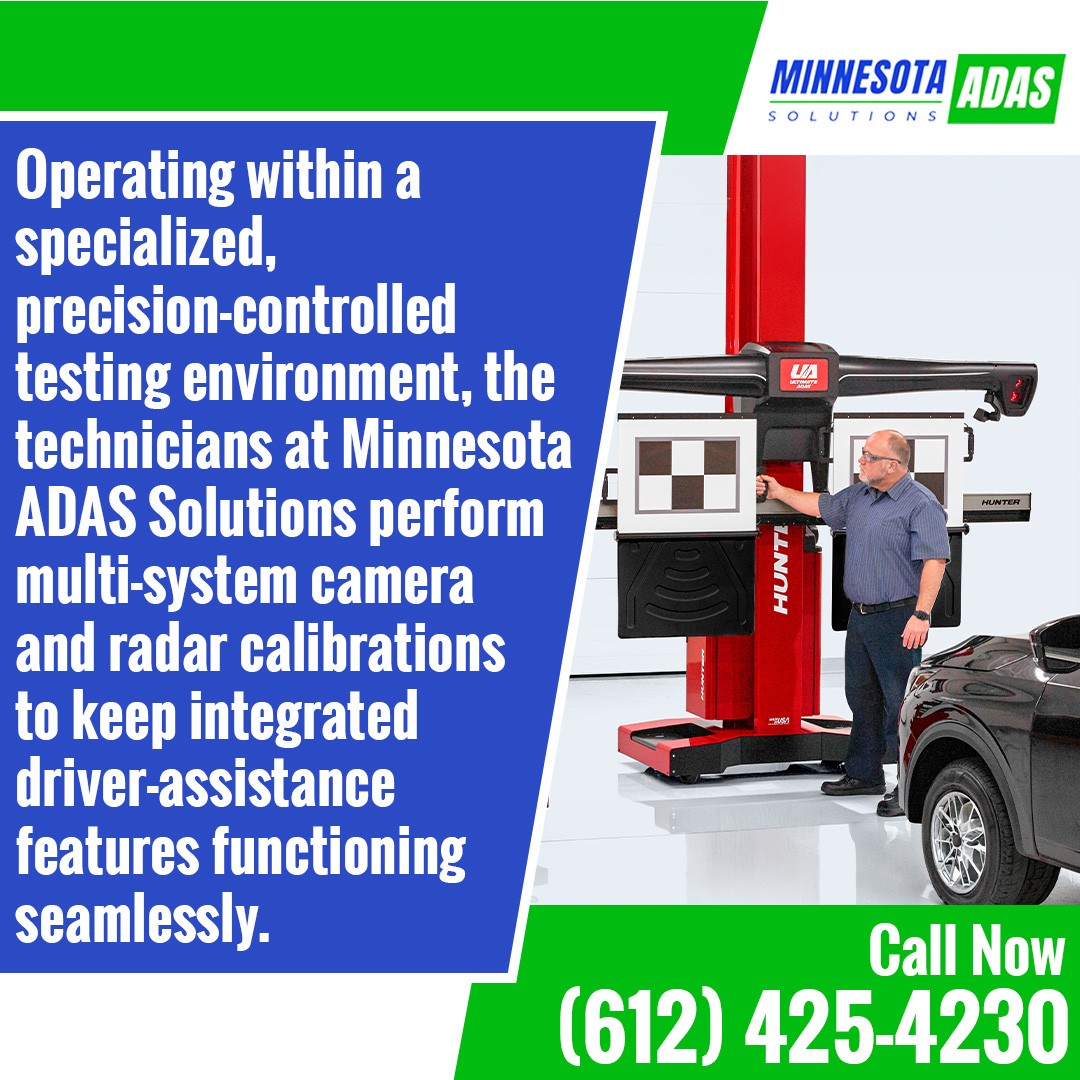
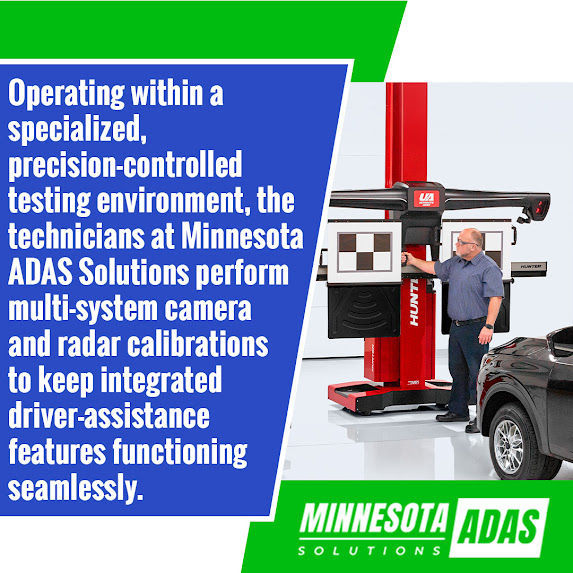
Calibration involves more than connecting a diagnostic tool to a vehicle. The process typically requires manufacturer-specified procedures, precise target placement, level flooring, controlled lighting conditions, and vehicle-specific measurements. Without these conditions, calibration results may not align with manufacturer requirements.
Minnesota ADAS Solutions performs adaptive cruise control calibration, lane departure warning calibration, forward collision warning calibration, blind spot monitoring calibration, and other ADAS services in a dedicated calibration environment designed to support OEM procedures across multiple vehicle brands.
Industry Awareness Continues to Grow Around ADAS Calibration
The increasing presence of ADAS-equipped vehicles has led to greater discussion throughout the automotive repair industry regarding post-repair calibration practices. Repair facilities, insurers, vehicle manufacturers, and safety organizations have all emphasized the role of sensor calibration in maintaining the functionality of driver-assistance systems after repairs.
"Many drivers are surprised to learn that a repaired vehicle can still have sensor alignment issues that are not visible from the outside," says CJ Peeters, owner of Minnesota ADAS Solutions. "As more vehicles rely on cameras and radar for everyday safety functions, calibration has become an important part of restoring those systems after repairs that may affect sensor positioning."
Industry observers expect demand for calibration services to continue growing as newer vehicle models incorporate additional ADAS technologies and more advanced sensor systems.
Documentation Supports Repair Verification
In addition to performing calibrations, many facilities now provide documentation showing that calibration procedures were completed according to manufacturer specifications. This documentation can help vehicle owners, repair facilities, insurers, and fleet operators verify that required calibration work was performed following repairs.
As ADAS technology becomes more common across vehicle segments, calibration records are increasingly viewed as part of the overall repair documentation process.
About Minnesota ADAS Solutions
Minnesota ADAS Solutions is an ADAS calibration provider based in Bloomington, Minnesota, serving vehicle owners, collision repair facilities, dealerships, and fleet operators throughout the region. The facility specializes in calibration services for vehicles equipped with advanced driver-assistance technologies. Operating from a dedicated calibration facility, they perform manufacturer-compliant calibration procedures using specialized equipment, controlled environments, and documented processes designed to support modern vehicle safety technology following repairs and component replacements.
Media Contact
CJ Peeters
Owner, Minnesota ADAS Solutions
9555 James Ave S
Bloomington, MN 55431
Phone: (612) 425-4230
Email: info@mnadas.com
Contact: https://www.mnadas.com/contact/

