ADAS Diagnostics Help Identify Issues Before Calibration
The publication explains that every post-repair process should begin with ADAS diagnostics in Bloomington, MN, to identify electronic issues that may not be visible during a physical inspection. Even when exterior repairs appear complete, hidden fault codes, disconnected modules, or communication errors may still exist within the vehicle's electronic systems.
Using OEM-level scan tools, technicians review multiple control modules before any calibration work begins. This allows repair-related issues to be identified before additional procedures are performed.
The importance of these diagnostic checks is reflected in national research. The Partnership for Analytics Research in Traffic Safety (PARTS), a collaboration between the National Highway Traffic Safety Administration (NHTSA) and major vehicle manufacturers, found that automatic emergency braking reduces front-to-rear crashes by 49% when the system is functioning properly. That finding highlights why electronic safety systems should be evaluated after collision repairs.
"Cameras, radar, and software all have to work together, so nothing about a post-repair vehicle is really finished until the electronics are checked too," said CJ Peeters, owner of Minnesota ADAS Solutions. "We follow the manufacturer's procedures from diagnostics through final documentation, so repair facilities have a complete record for every vehicle that comes through our doors."
Programming and Coding Prepare Vehicle Systems for Accurate Operation
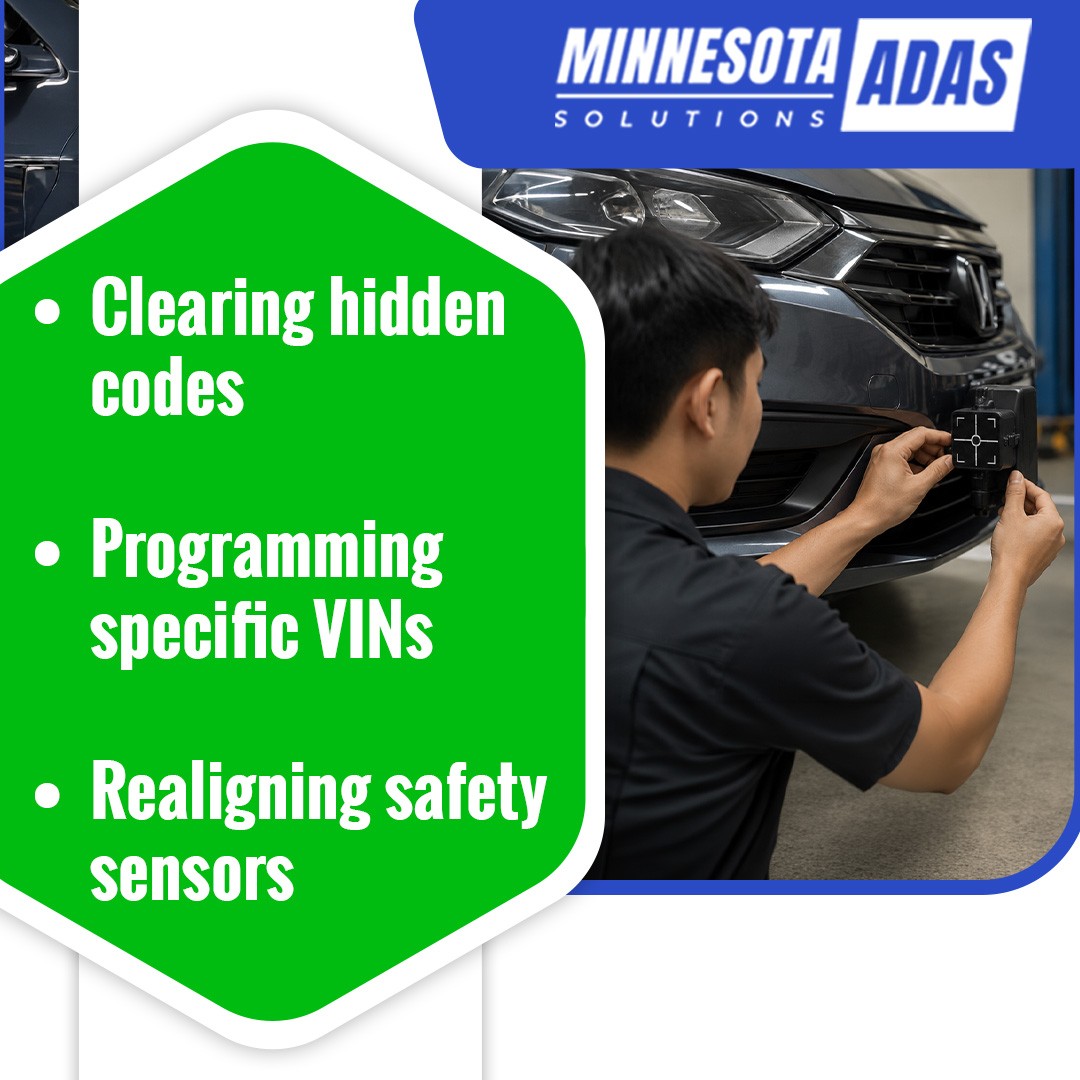
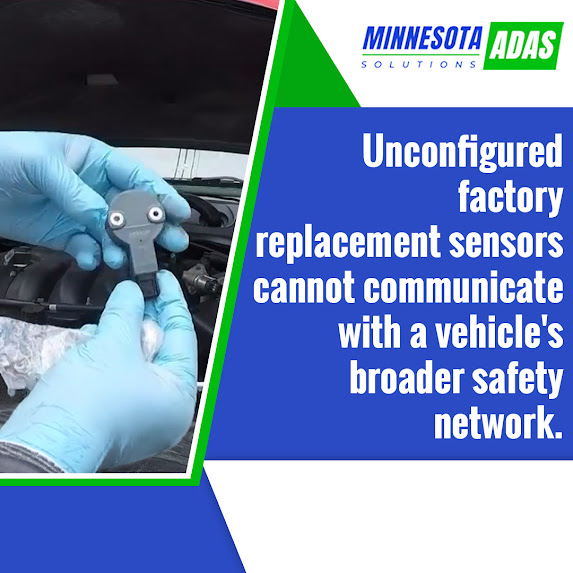
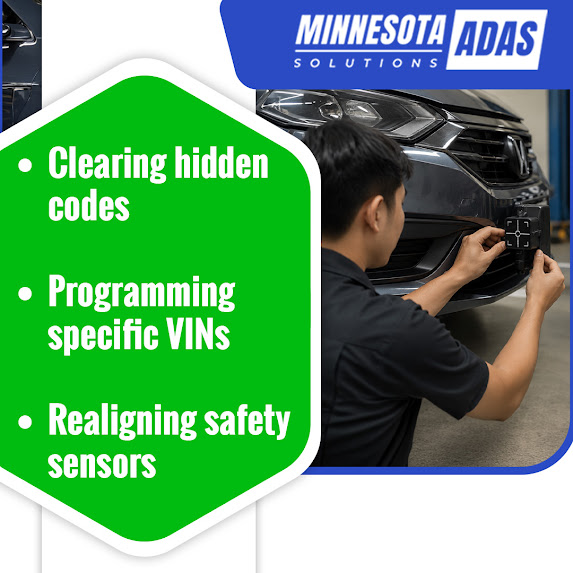
Replacement cameras, radar sensors, and electronic modules often require ADAS programming and coding before calibration can begin. Factory replacement components typically arrive without vehicle-specific software settings and must be programmed using the vehicle identification number (VIN).
Following OEM ADAS calibration procedures, technicians configure replacement modules, install software updates when required, and confirm communication between electronic systems before moving to sensor alignment.
This step helps reduce failed calibration attempts that can occur when replacement components have not been configured according to manufacturer specifications.
Post-Collision ADAS Calibration Requires Vehicle-Specific Procedures
Following diagnostics and programming, post-collision ADAS calibration is performed, where cameras and sensors are aligned using manufacturer-approved targets and equipment. Calibration is performed according to specifications developed for each vehicle rather than using a universal process.
Suspension repairs, windshield replacement, bumper replacement, and wheel alignment may all affect sensor positioning, making calibration necessary even after relatively minor repairs. Rather than viewing calibration as a single event, the publication describes it as one part of a larger repair workflow that includes inspection, software configuration, and final verification.
ADAS System Verification and Documentation Complete the Repair Record
The resource also focuses on ADAS system verification and documentation, explaining how calibration records provide evidence that post-repair procedures were completed according to manufacturer specifications.
Typical documentation may include:
-
Pre-repair diagnostic scan reports
-
Post-repair scan results
-
Calibration reports showing completed target values
-
VIN-linked technician records
-
Photo documentation of calibration equipment and vehicle positioning
-
Road test records when required by the manufacturer
These records can support communication between repair facilities, insurers, and vehicle owners while documenting work performed during the repair process.
Industry trends also show why documentation continues to receive greater attention. The Insurance Institute for Highway Safety (IIHS) reports that automakers representing 99% of U.S. light-vehicle sales have committed to making forward collision warning and automatic emergency braking standard equipment. As these technologies become standard across newer vehicles, following OEM ADAS calibration procedures and maintaining complete repair documentation have become increasingly relevant throughout the collision repair industry.
About Minnesota ADAS Solutions
Minnesota ADAS Solutions is a Minnesota-based provider of Advanced Driver Assistance Systems diagnostics, programming, calibration, verification, and documentation for collision repair facilities and vehicle owners. The company operates dedicated ADAS calibration facilities in Bloomington, Lakeville, Maple Grove, Rochester, Waite Park, and Woodbury, Minnesota, using OEM-level equipment and manufacturer-specific repair procedures across a wide range of vehicle makes and models.
Media Contact
CJ Peeters
Owner, Minnesota ADAS Solutions
9555 James Ave S
Bloomington, MN 55431
Phone: (612) 425-4230
Email: info@mnadas.com
Contact: https://www.mnadas.com/contact/

